



Vasopressin Receptor
The neurohypophysial hormone arginine vasopressin (AVP) is involved in diverse functions including regulation of body fluid homeostasis, vasoconstriction, and adrenocorticotropic hormone release. These physiological effects are mediated by three subtypes of vasopressin receptors, designated V1a, V1b (or V3), and V2. They all belong to the large rhodopsin-like G-protein-coupled receptor family.
The V1a receptor is expressed in both neuronal and non-neuronal tissues including the heart and elicits a variety of physiological effects including cell contraction and proliferation, stimulation of hepatic glycogenolysis, platelet aggregation and coagulation factor release. The V1b receptor subtype is found predominantly in the pituitary gland where it stimulates adrenocorticotropic hormone release. Both the V1a and V1b AVP receptors act through a G protein alpha-subunit of the Gαq family (αq, q11, q14, α15/16) to activate phospholipase C-β, and, thus enhance cellular IP3 and calcium levels. By contrast, the V2 receptor subtype is localized predominantly to the kidney where it mediates the anti-diuretic effects of AVP through the heterotrimeric G protein Gs and activation of adenylyl cyclase.
Vasopressin Receptor Isoform Specific Products
All Product Categories
-
Vasopressin Receptor Inhibitors
(11)
View all products
-
Vasopressin Receptor Agonists
(37)
View all products
-
Vasopressin Receptor Antagonists
(62)
View all products
-
Vasopressin Receptor Activators
(3)
View all products
-
Vasopressin Receptor Modulator
(1)
View all products
-
Vasopressin Receptor Control
(1)
View all products
-
Vasopressin Receptor Ligand
(1)
View all products
-
Vasopressin Receptor Related Products (127)
Related Products (127)

-
Vasopressin Receptor Isoform Comparison
-
Tolvaptan
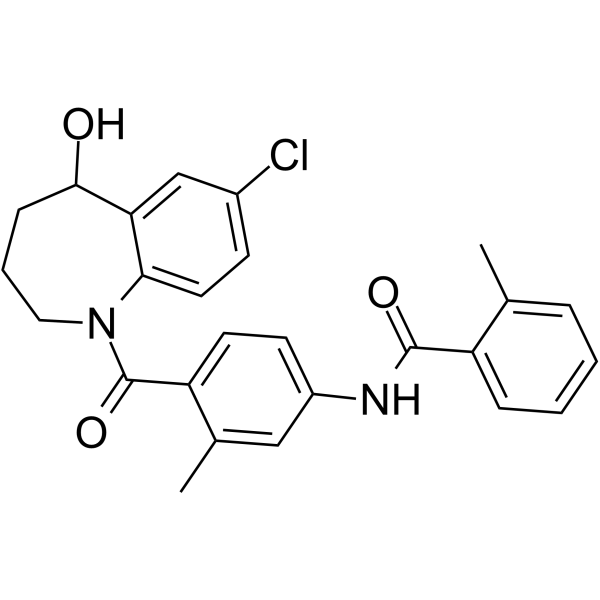 0 ImagesSynonyms: OPC-41061Tolvaptan is a selective, competitive and orally active vasopressin receptor 2 (V2R) antagonist with an IC50 of 1.28 μM for the inhibition of arginine vasopressin (AVP)-induced platelet aggregation. Tolvaptan induces cell apoposis and affects cell cycle. Tolvaptan can be used for the research of hyponatremia.
-
Argipressin
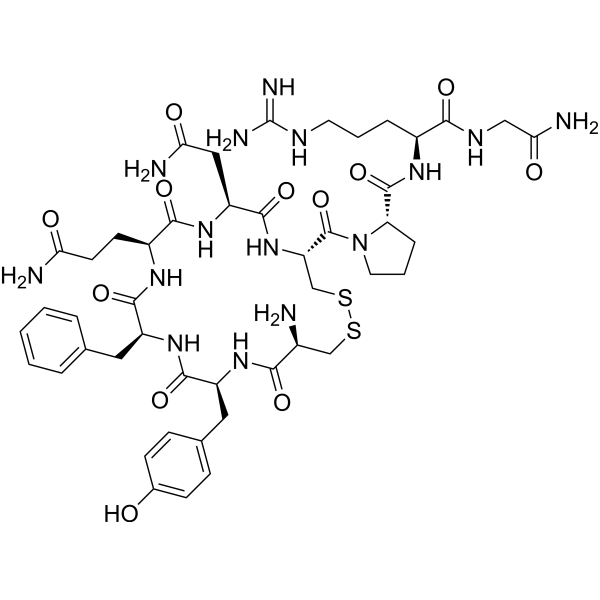 0 ImagesArgipressin (Arg8-vasopressin) binds to the V1, V2, V3-vascular arginine vasopressin receptor, with a Kd value of 1.31 nM in A7r5 rat aortic smooth muscle cells for V1.
-
Conivaptan hydrochloride
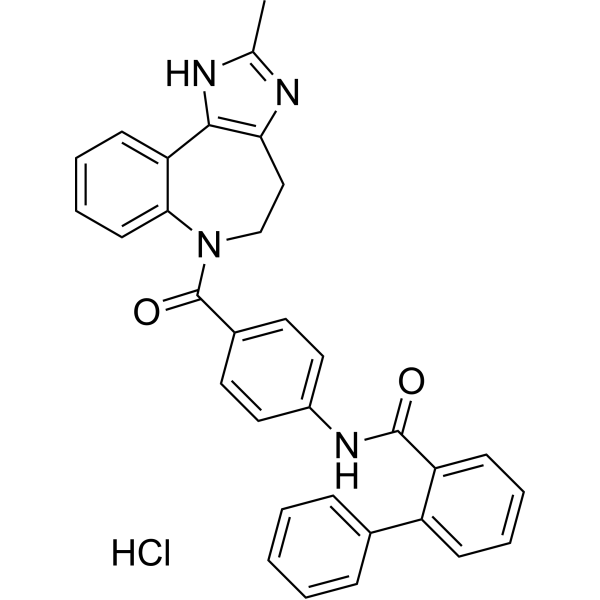 0 ImagesSynonyms: YM 087Conivaptan hydrochloride (YM 087) is an orally active dual vasopressin V1a/V2 receptor antagonist with Ki values of 0.48 nM and 3.04 nM for vasopressin V1a receptor and V2 receptor, respectively. Conivaptan hydrochloride competitively and reversibly blocks vasopressin-mediated antidiuresis, vasoconstriction, and cellular hypertrophy, while inhibiting CYP3A4. Conivaptan hydrochloride inhibits vasopressin-induced intracellular calcium, cAMP, and mitogen-activated kinase activation in vascular smooth muscle cells and cardiomyocytes. Conivaptan hydrochloride induces water diuresis while improving hemodynamics in heart failure models, reducing left ventricular end-diastolic pressure, vascular resistance, and organ weight. Conivaptan hydrochloride is used for research on hyponatremia and congestive heart failure.
-
Atosiban
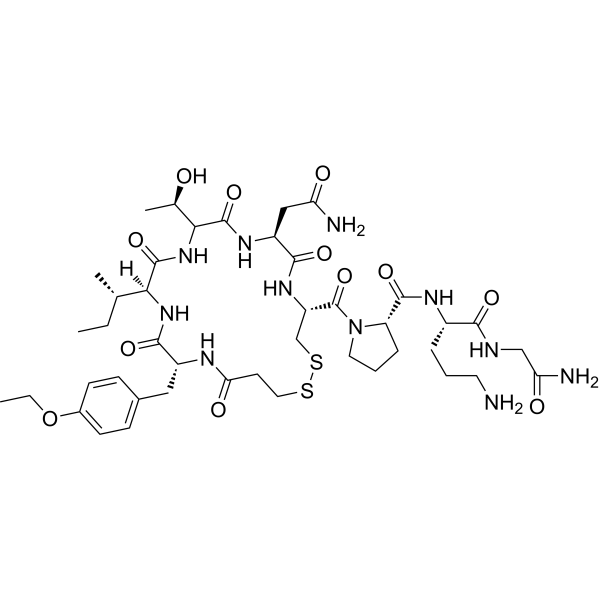 0 ImagesSynonyms: RW22164; RWJ22164Atosiban (RW22164; RWJ22164) is a nonapeptide competitive vasopressin/oxytocin receptor antagonist, and is a desamino-oxytocin analogue. Atosiban is the main tocolytic agent and has the potential for spontaneous preterm labor research.
-
SR 49059
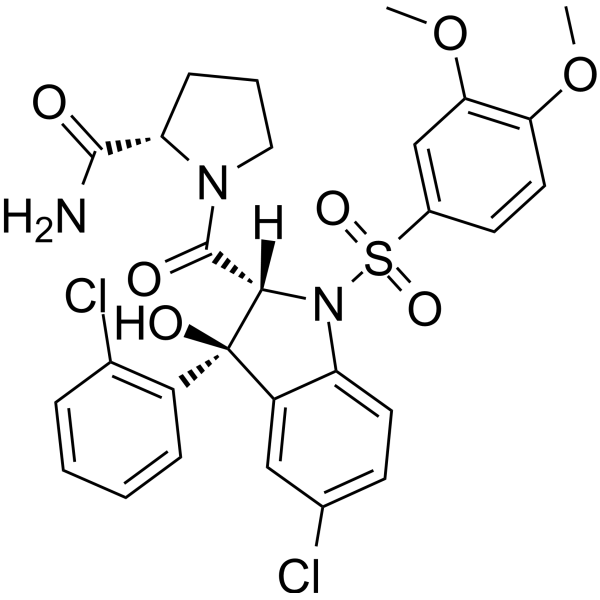 0 ImagesSR 49059 (SR-49059) is a potent, orally active, selective vasopressin V1a antagonist with a Ki vaule of 1.4 nM.
-
Lysipressin
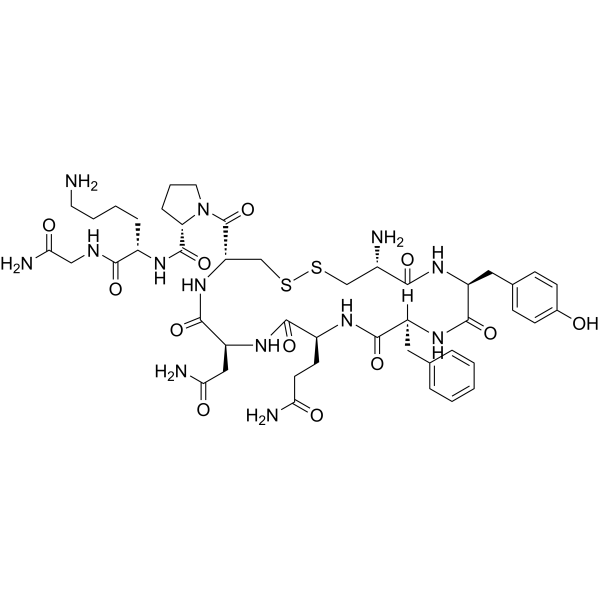 0 ImagesLysipressin (Lysine vasopressin ; [Lys8]-Vasopressin ) is a neurohypophyseal nonapeptide with dual cardiovascular regulatory activities of peripheral pressor action and central hypotensive action, and it also regulates pain perception in the body. Lysipressin is an Oxytocin Receptor agonist, with a Ki value of 10.2 nM for porcine OT receptor. Lysipressin stimulates contraction of rabbit bladder smooth muscle via V1-vasopressin receptor. The central hypotensive effect of Lysipressin depends on the sympathetic tone pathway. Lysipressin dose-dependently prolongs tail-flick latency in rats, producing a stable central antinociceptive effect. Lysipressin can be used in studies related to cardiovascular regulation, hypertension and pain.
-
Lysipressin acetate
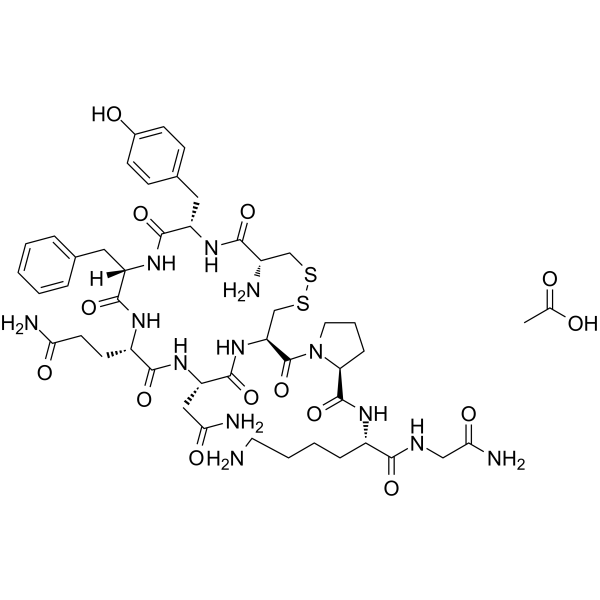 0 ImagesSynonyms: Lysine vasopressin acetate; [Lys8]-Vasopressin acetateLysipressin acetate (Lysine vasopressin acetate; [Lys8]-Vasopressin acetate) is a neurohypophyseal nonapeptide with dual cardiovascular regulatory activities of peripheral pressor action and central hypotensive action, and it also regulates pain perception in the body. Lysipressin acetate is an Oxytocin Receptor agonist, with a Ki value of 10.2 nM for porcine OT receptor. Lysipressin acetate stimulates contraction of rabbit bladder smooth muscle via V1-vasopressin receptor. The central hypotensive effect of Lysipressin acetate depends on the sympathetic tone pathway. Lysipressin acetate dose-dependently prolongs tail-flick latency in rats, producing a stable central antinociceptive effect. Lysipressin acetate can be used in studies related to cardiovascular regulation, hypertension and pain.
-
Terlipressin diacetate
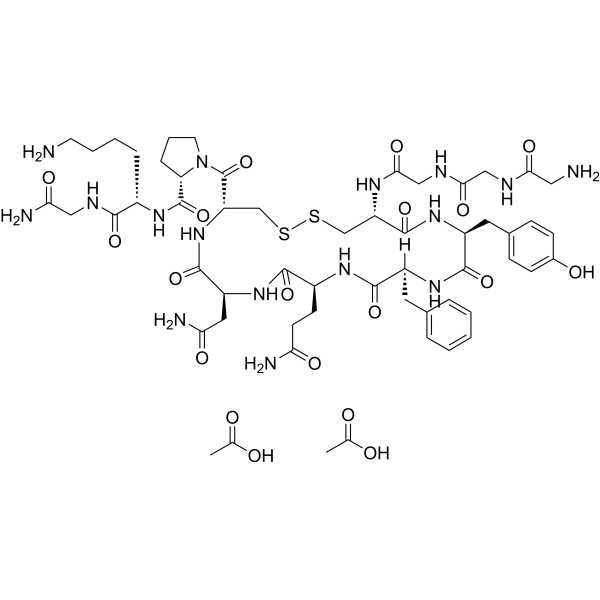 0 ImagesTerlipressin diacetate is a vasopressin analogue with potent vasoactive properties. Terlipressin diacetate is a highly selective vasopressin V1 receptor agonist that reduces the splanchnic blood flow and portal pressure and controls acute variceal bleeding. Terlipressin diacetate exerts anti-inflammatory and anti-oxidative effects. Terlipressin diacetate has the potential for hepatorenal syndrome and norepinephrine-resistant septic shock research.
-
Atosiban acetate
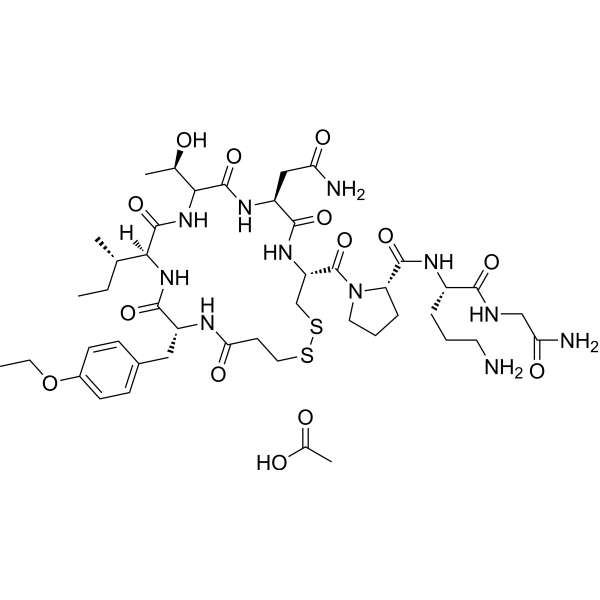 0 ImagesSynonyms: RW22164 acetate; RWJ22164 acetateAtosiban acetate (RW22164 acetate;RWJ22164 acetate) is a nonapeptide competitive vasopressin/oxytocin receptor antagonist, and is a desamino-oxytocin analogue. Atosiban is the main tocolytic agent and has the potential for spontaneous preterm labor research.
-
Nelivaptan
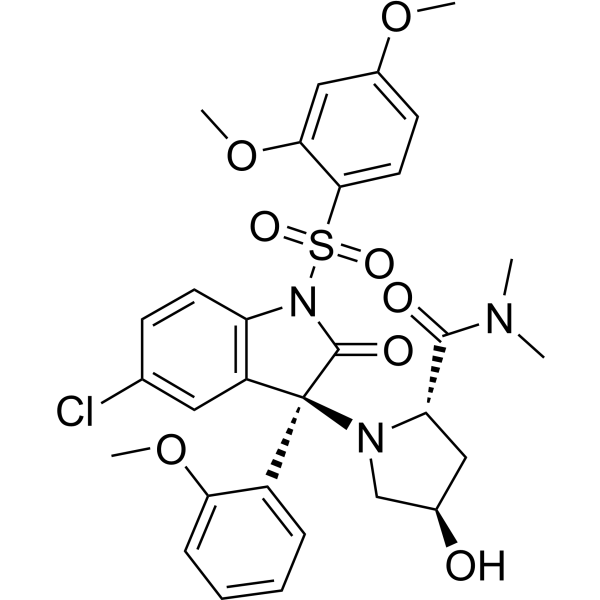 0 ImagesSynonyms: SSR-149415Nelivaptan (SSR-149415) is a selective and orally active vasopressin V1b receptor antagonist (Ki: 3.7 and 1.3 nM for native and recombinant rat V1b receptors, respectively). Nelivaptan inhibits arginine vasopressin (AVP)-induced Ca2+ increase and corticotropin secretion. Nelivaptan can be used for research of stress, anxiety and depression.
-
Mozavaptan
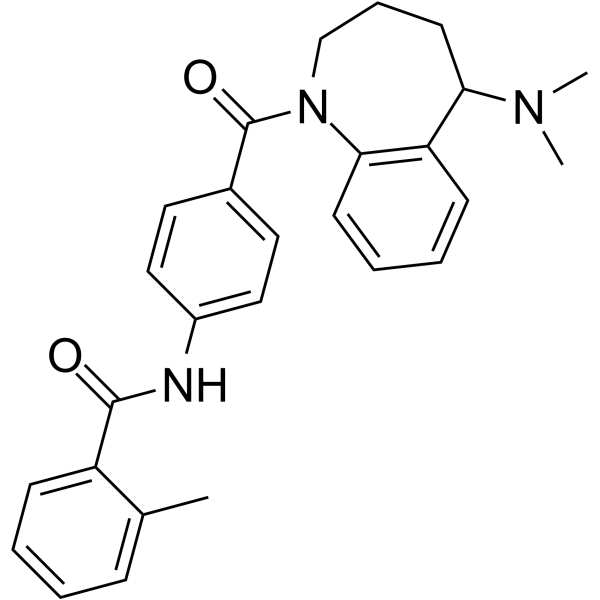 0 ImagesSynonyms: OPC-31260Mozavaptan (OPC-31260) is a benzazepine derivative and a potent, selective, competitive and orally active vasopressin V2 receptor antagonist with an IC50 of 14 nM. Mozavaptan shows ~85-fold selectivity for V2 receptor over V1 receptor (IC50 of 1.2 μM), and can antagonize the antidiuretic action of arginine vasopressin (AVP) in vivo. Mozavaptan has the potential for hyponatremia, syndrome of inappropriate antidiuretic hormone (SIADH), and congestive heart failure treatment.
-
L-371,257
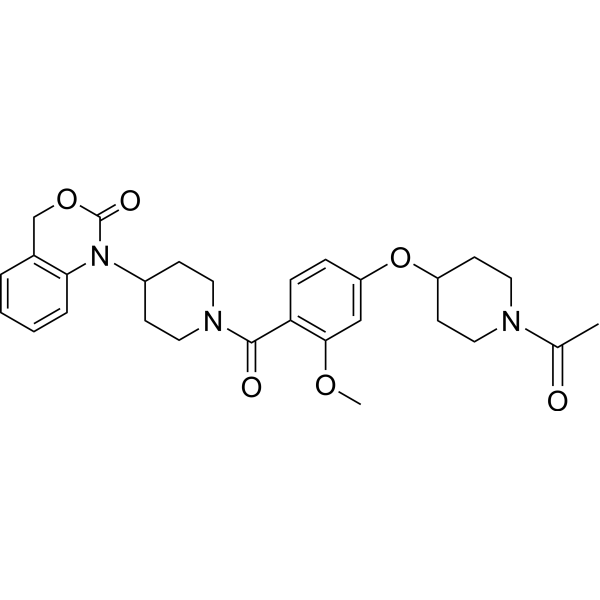 0 ImagesL-371,257 is an orally bioavailable, non-blood-brain barrier penetrant, selective and competitive antagonist of oxytocin receptor (pA2=8.4) with high affinity at both the oxytocin receptor (Ki=19 nM) and vasopressin V1a receptor (Ki=3.7 nM).
-
Balovaptan
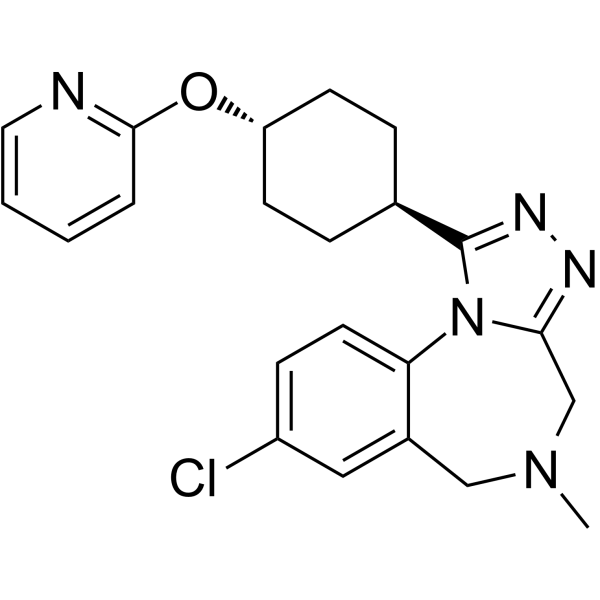 0 ImagesSynonyms: RG7314Balovaptan (RG7314) is an orally available, selective brain-penetrant vasopressin 1a (hV1a) receptor antagonist, with Kis of 1 and 39 nM for human (hV1a) and mouse (mV1a) receptors, and is used for the research of autism.
-
Selepressin
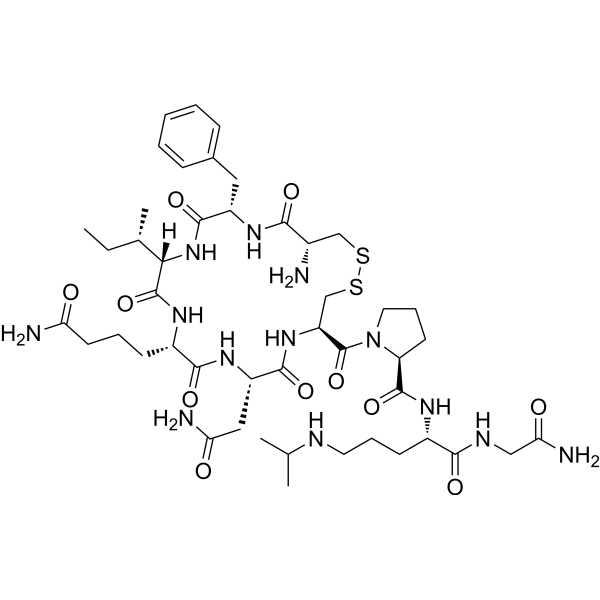 0 ImagesSynonyms: FE 202158Selepressin (FE 202158) is a selective vasopressin V1A receptor agonist. Selepressin is a potent vasopressor. Selepressin can be used in the research of septic shock.
-
D[LEU4,LYS8]-VP TFA
![D[LEU4,LYS8]-VP TFA](https://file.medchemexpress.com/product_pic/hy-p1163a.gif "Click to View D[LEU4,LYS8]-VP TFA Product Detail") 0 ImagesCat. No.: HY-P1163APurity: 98.97%D[LEU4,LYS8]-VP TFA is a selective agonist of vasopressin V1b receptor, with the Kis of 0.16 nM, 0.52 nM, and 0.1.38 nM for rat, human and mouse V1b receptor, respectively. D[LEU4,LYS8]-VP TFA has weak antidiuretic, vasopressor, and in vitro oxytocic activities.
0 ImagesCat. No.: HY-P1163APurity: 98.97%D[LEU4,LYS8]-VP TFA is a selective agonist of vasopressin V1b receptor, with the Kis of 0.16 nM, 0.52 nM, and 0.1.38 nM for rat, human and mouse V1b receptor, respectively. D[LEU4,LYS8]-VP TFA has weak antidiuretic, vasopressor, and in vitro oxytocic activities.
-
Mozavaptan hydrochloride
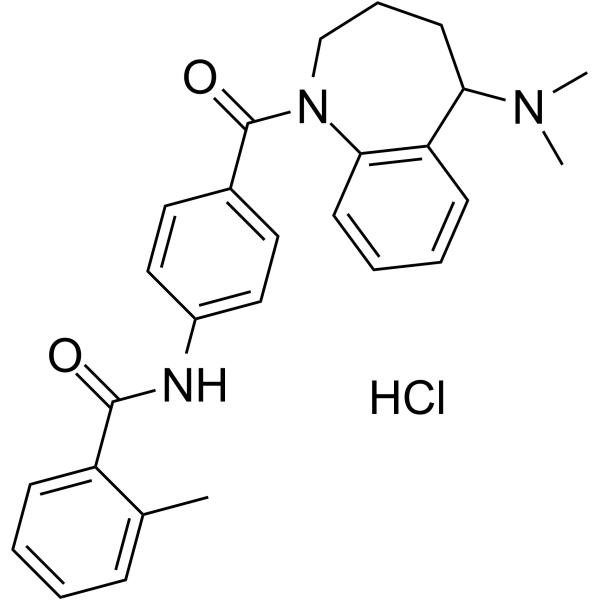 0 ImagesSynonyms: OPC-31260 hydrochlorideMozavaptan hydrochloride (OPC-31260 hydrochloride) is a benzazepine derivative and a potent, selective, competitive and orally active vasopressin V2 receptor antagonist with an IC50 of 14 nM. Mozavaptan hydrochloride shows ~85-fold selectivity for V2 receptor over V1 receptor (IC50 of 1.2 μM), and can antagonize the antidiuretic action of arginine vasopressin (AVP) in vivo. Mozavaptan hydrochloride has the potential for hyponatremia, syndrome of inappropriate antidiuretic hormone (SIADH), and congestive heart failure treatment.
-
Lixivaptan
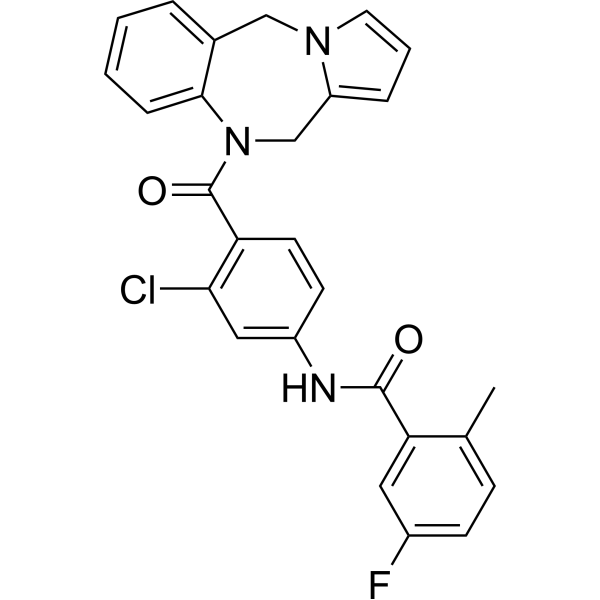 0 ImagesSynonyms: VPA-985; WAY-VPA 985Lixivaptan (VPA-985, WAY-VPA 985) is an orally active and selective vasopressin receptor V2 antagonist, with IC50 values of 1.2 and 2.3 nM for human and rat V2, respectively.
-
Imidafenacin
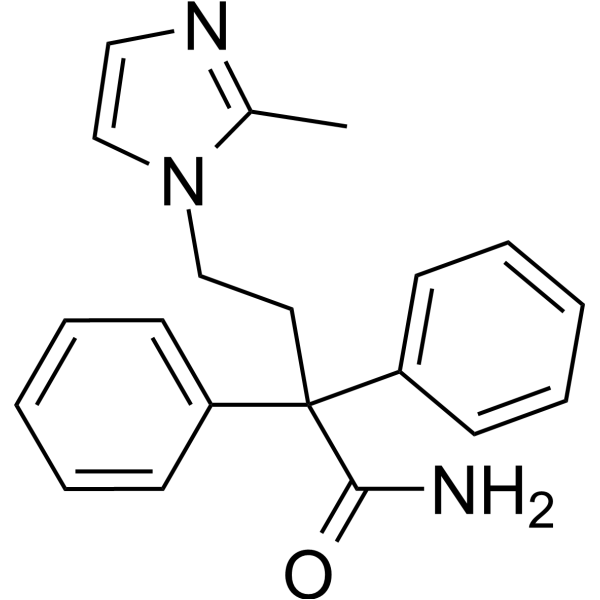 0 ImagesSynonyms: KRP-197; ONO-8025Imidafenacin (KRP-197; ONO-8025) is an orally active inhibitor of muscarinic (mAChR) M1 and M3 receptors. Imidafenacin potently inhibits bladder contraction in vivo and exerts an antidiuretic effect by enhancing the signaling pathway of vasopressin (antidiuretic hormone). Imidafenacin can be used in research related to overactive bladder.
-
2-Guanidinobezimidazole
 0 ImagesCat. No.: HY-W158030CAS No.: 5418-95-1Synonyms: 2GBI2-Guanidinobezimidazole (2GBI) is a NLRP3 agonist with a KD of 1.29 μM and a selective state-dependent HVCN1 blocker. 2-Guanidinobezimidazole directly binds NLRP3’s LRR domain, enhances NLRP3-ASC and NLRP3-NEK7 interactions, and drives NLRP3 inflammasome activation. 2-Guanidinobezimidazole can be used for the research of LLC lung carcinoma, B16F10 melanoma and ischemic stroke.
-
SRX246
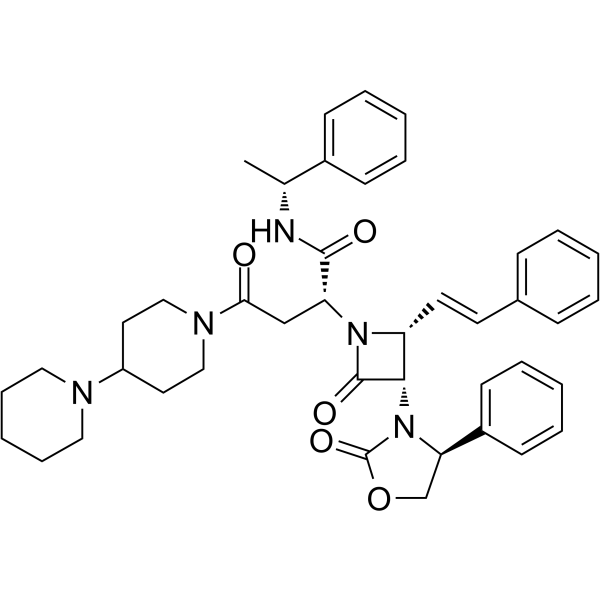 0 ImagesSRX246 is a potent, BBB-penetrant, highly selective vasopressin 1a (V1a) receptor antagonist (Ki=0.3 nM for human V1a). SRX246 has no interaction at V1b and V2 receptors. SRX246 also displays negligible binding at 64 others receptors classes, including 35 G-proteincoupled receptors. SRX246 can be used for treatment of stress-related disorders.



